“What Are You Really Trying to Do?”
Co-Creating Life Goals from Everyday Computer Use
UIST 2026
Abstract
Recent advances in user modeling make it feasible to conduct open-ended inference over a person's everyday computer use. Despite longstanding visions of systems that deeply understand our actions and the purposes they serve in our lives, existing systems only capture what a person is doing in the moment, not why they are doing it, limiting these systems to surface-level support. We introduce striving co-creation, a process for inferring broader life goals from unstructured observations of computer use. Grounded in Activity Theory and Emmons' personal strivings framework, our system progressively constructs a hierarchical representation of a person's activities. Strivings are, however, difficult to fully resolve from observation alone, as the same action can be driven by many different goals. Our system therefore supports an editing interface that gives people agency over how they are understood by the system, feeding their corrections back into subsequent rounds of striving induction. In a week-long field deployment (N=14), we find that our co-creation process produces strivings that participants recognize as representative of their long-term goals and gives them greater agency than baseline methods.
Observations are stored as a hierarchy in an annotated graph.
What Are You Really Trying to Do?




Results
We ran a week-long study with 14 participants.
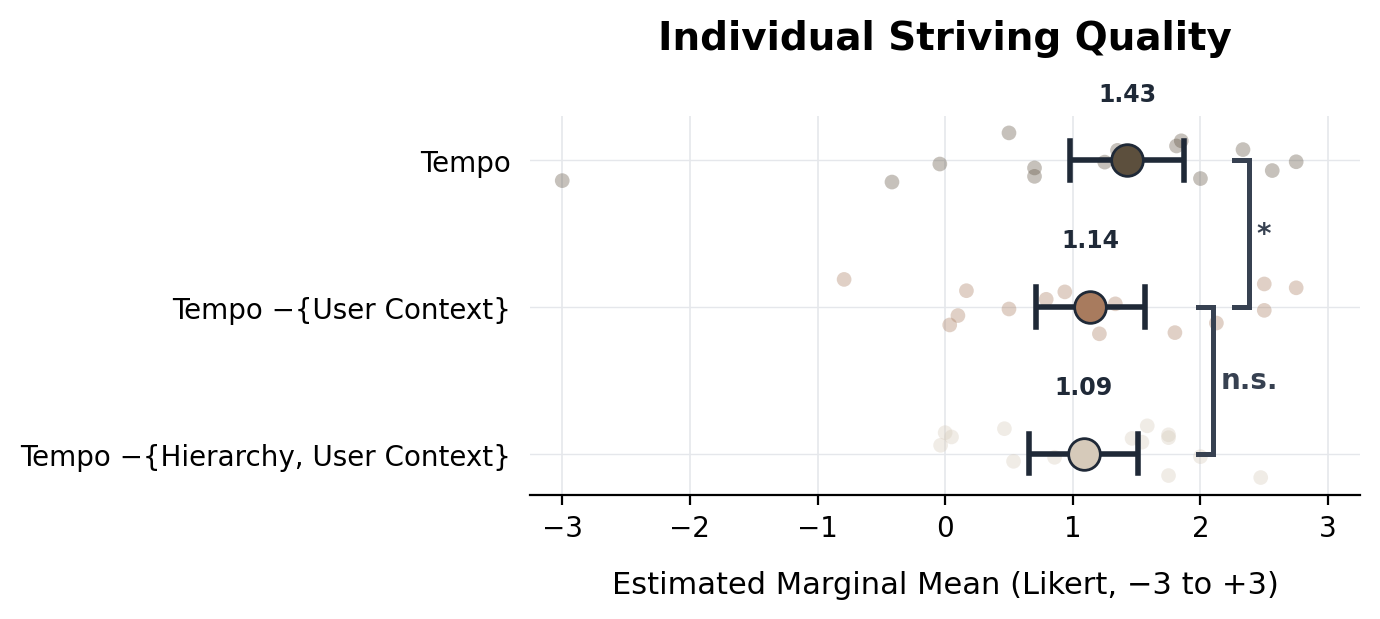
Onboarding context improves individual striving quality.
Information people shared about their lives helped Tempo interpret their computer use and infer better strivings.
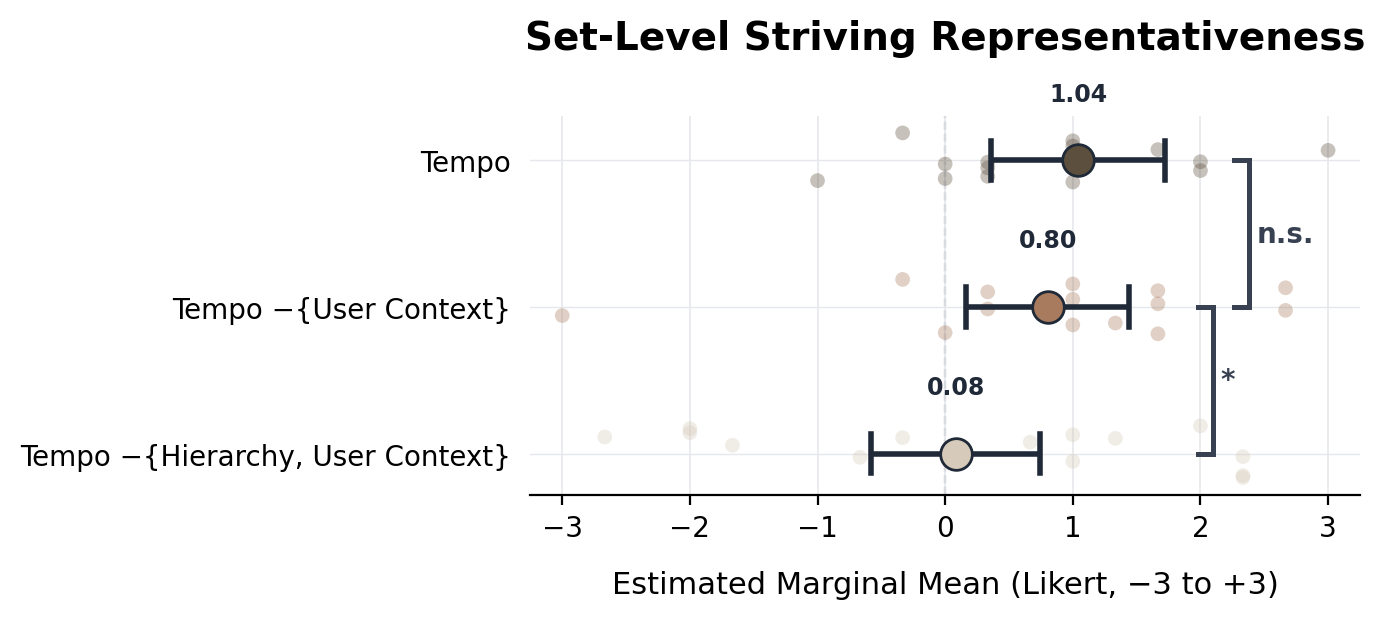
Hierarchy produces a more representative set of strivings.
Grouping observations into intermediate levels helped the overall set reflect what participants were working toward.
Hierarchy supports a better editing experience.
Participants rated editing with the hierarchy more highly than editing with the screenshot view.
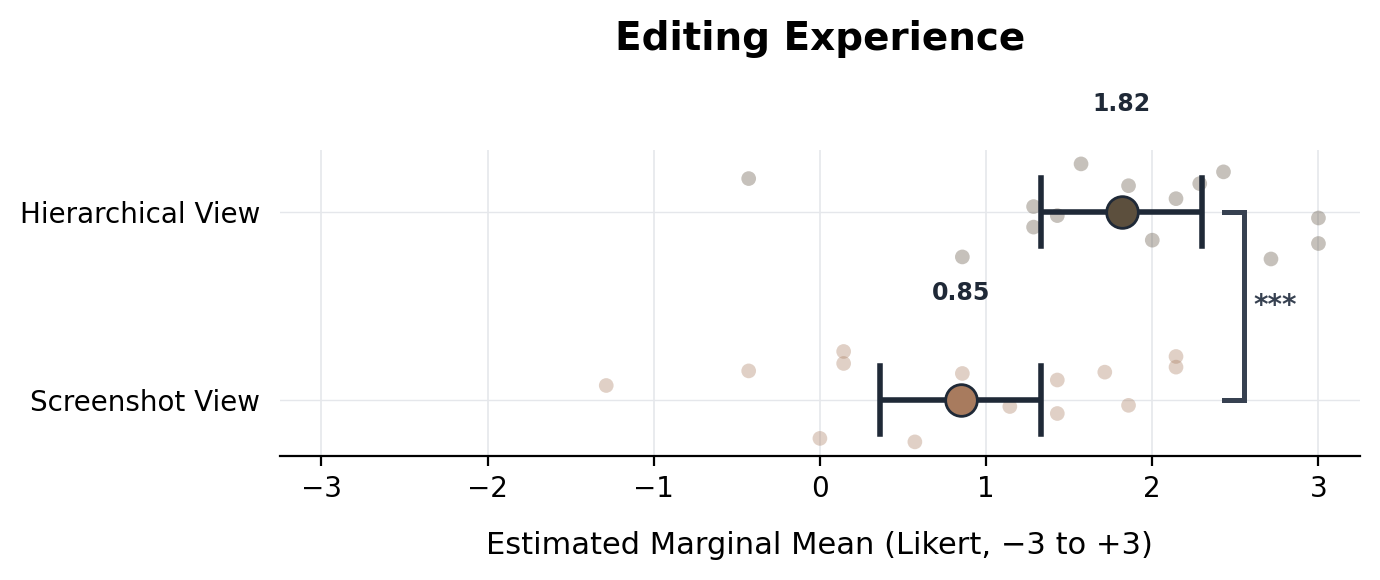
Estimated marginal means on a −3 to +3 scale; error bars show ±1.96 SE.
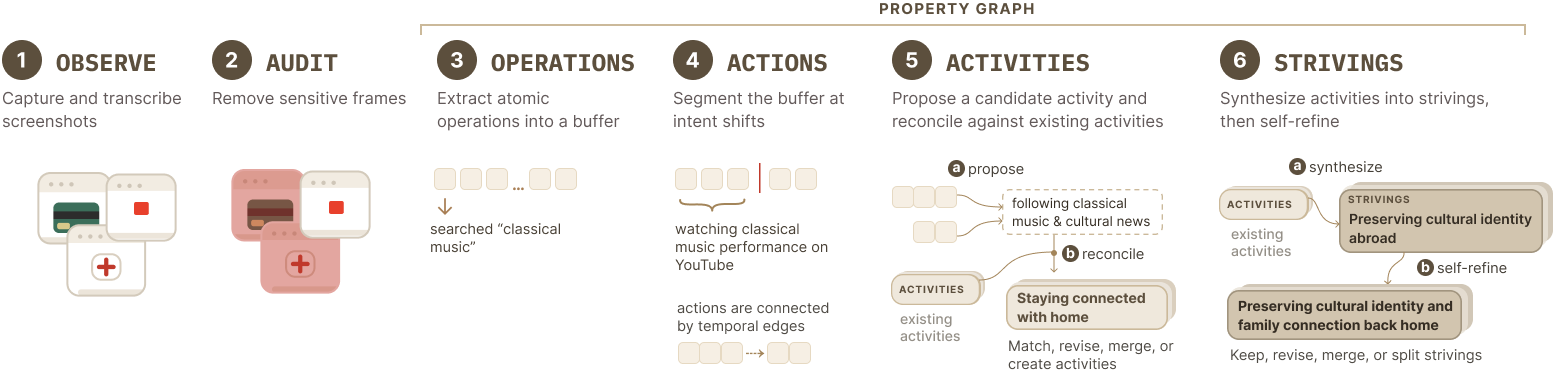
How Tempo works
Screen observations become operations, actions, activities, and strivings.
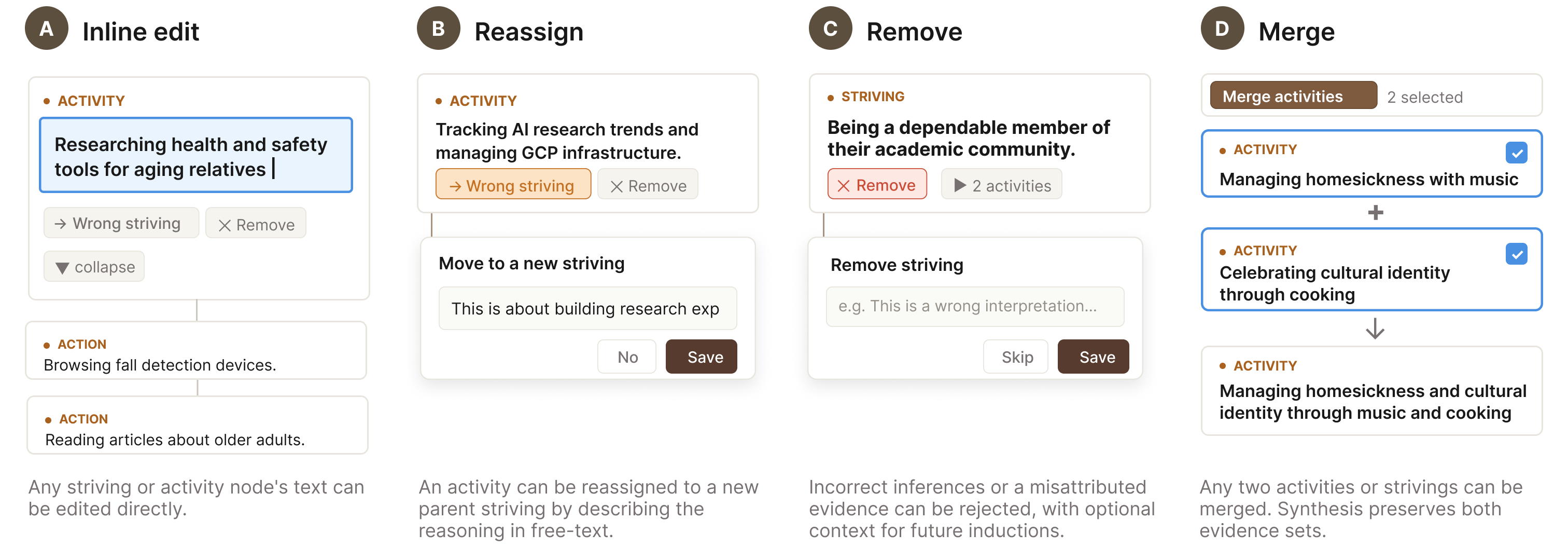
Editing the hierarchy
People can edit, reassign, remove, and merge the system’s interpretations.
Citation
Shardul Sapkota, Matthew Jörke, Zane Sabbagh, Omar Shaikh, Grace Wang, and James A. Landay. 2026. “What Are You Really Trying to Do?”: Co-Creating Life Goals from Everyday Computer Use. In The 39th Annual ACM Symposium on User Interface Software and Technology (Detroit, MI, USA) (UIST ’26). Association for Computing Machinery, New York, NY, USA, 20 pages. doi:10.1145/3830398.3830630
@inproceedings{sapkota2026tempo,
  author = {Sapkota, Shardul and J{\"o}rke, Matthew and Sabbagh, Zane and
            Shaikh, Omar and Wang, Grace and Landay, James A.},
  title = {``What Are You Really Trying to Do?'':
           Co-Creating Life Goals from Everyday Computer Use},
  booktitle = {The 39th Annual ACM Symposium on
               User Interface Software and Technology},
  year = {2026},
  publisher = {Association for Computing Machinery},
  address = {New York, NY, USA},
  location = {Detroit, MI, USA},
  numpages = {20},
  doi = {10.1145/3830398.3830630},
  url = {https://doi.org/10.1145/3830398.3830630},
  series = {UIST '26}
}